


On-campus living at Clark Atlanta University creates the foundation for meaningful friendships, personal discovery, and a true sense of belonging. In our residence halls, students find spaces where they can grow, connect, and shape the CAU experience that feels uniquely their own.
Applying For Housing
Your first step to getting started is to apply for on-campus housing. We offer a variety of on-campus housing options. For a full descriptions of each Hall, please check out Housing Options. Applications are accepted online during registration only.
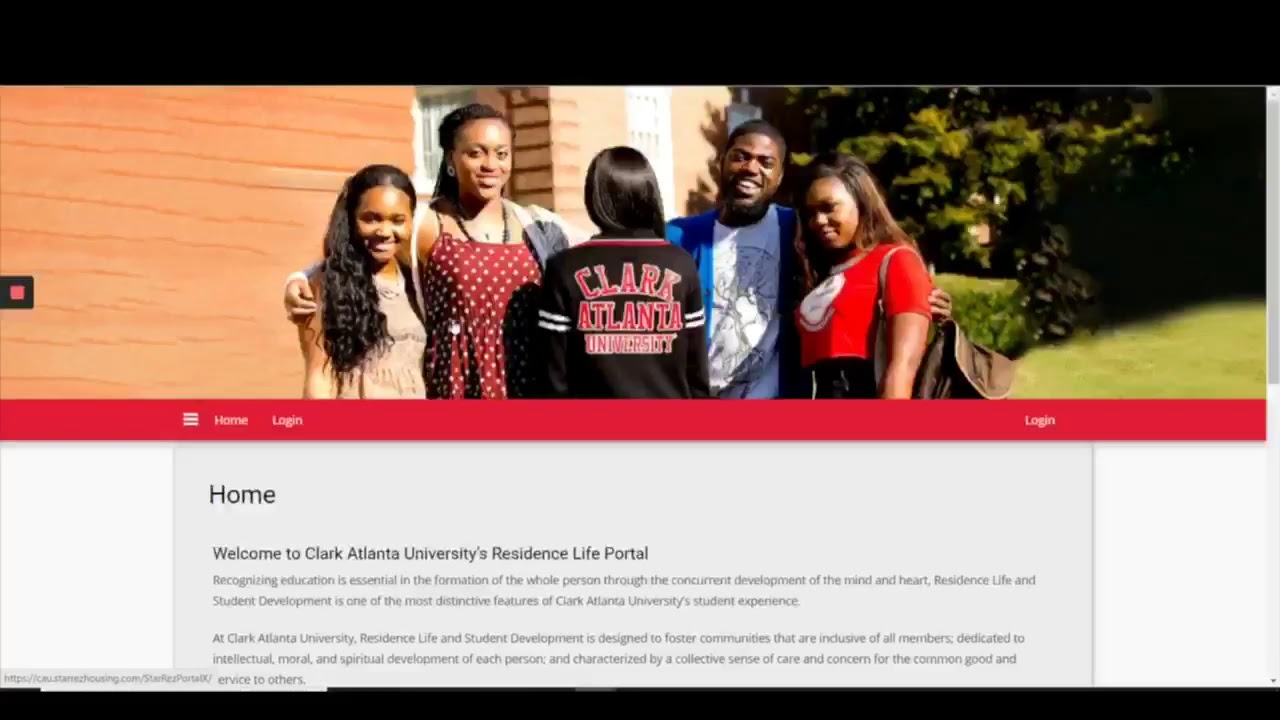
How to Sign Into the Housing Portal
Important Information
- Transportation. If you don’t have a car, choose a neighborhood that is close to bus lines or within walking distance.
- Leases are generally for one year. It can be convenient if you decide to go home for the summer yet still want someplace to put your belongings. However, you might not want to pay for the rent for the whole year if you are not staying for the summer. In this case, you might think about subletting your place while you are away. Note: not all landlords allow their tenants to sublet their apartments/houses, so take this into account when signing contacts.
- Security Deposits. Most rentals require a deposit-usually the equivalent of one month’s rent. At the end of your lease, you will get this deposit back, less any fees for damages.
- Rent. Check out Rental Market Trends in Atlanta. Most students will rent a multi-unit house (3 bedrooms, for example, and split the rent evenly). Utilities such as Cable TV, Internet, Electric, Heat, and Hot water typically cost extra and will be split evenly amongst the inhabitants.
- Background Checks. Some rental applications might require a background check.
- Renters’ Insurance. The landlord’s property insurance policy usually does not cover your personal possessions inside your apartment, so you might need to consider purchasing renters’ insurance to cover your personal belongings. The renter’s insurance is usually inexpensive, ranging from $10-$20 per month. Getting a quote online from different insurance companies is a fairly quick process for choosing renters’ insurance.
- Issues/Concerns. Notify your landlord or leasing office in writing of any existing problems or damages when you move in. Upon moving in always take pictures of the condition of the apartment/ house. Documenting the condition of the residence upon move-in is always a good idea in case the landlord attempts to withhold your security deposit due to previous damage.
- Repairs. If damage to the property occurs during the rental period, it is the landlord’s responsibility to fix/ repair the damage.
- Roommates/Housemates. Be mindful when selecting your roommates/housemates. Choose roommates who will fulfill their share of obligations for the rent. Discuss and establish a mutual agreement about things like quiet hours, guest policy, grocery share/or not, cleaning responsibilities, etc.
- Plan Ahead and Start Early. Some apartments fill up quickly when the school start date is approaching, you might want to look for rentals early.
- Talk to other students who are currently living off campus. You may not be familiar with the local area, so talk to peers who might know the area better to find out about their neighborhoods and their experiences.
house
